

Drying is one of the most underestimated parts of glassware care. Many people focus heavily on soap choice or cleaning technique, then undo that effort in the final minutes by rushing the drying process or using methods that trap moisture in the most vulnerable areas of the glass.
In my experience, more long-term issues show up during drying than during washing. Residual moisture around rims and stems, towels that leave behind lint or odors, and air-drying setups that prevent proper airflow all contribute to problems that slowly compound. Glassware that smells musty, develops haze, or feels slightly off after drying is often reacting to how water was allowed to evaporate, not how it was cleaned.
This is why Why Drying Method Matters More Than Soap Choice is such an important concept for fine glassware. Even the gentlest cleaner cannot compensate for a drying method that allows moisture to sit too long or pulls contaminants back onto the surface as water evaporates.
Drying is also where unwanted odors tend to develop. Glassware that looks clean but smells faintly stale or sour is often holding onto moisture in enclosed areas or drying in environments with limited airflow. In those cases, understanding How to Remove Odors From Wine and Whiskey Glasses helps explain why certain drying setups prevent odor buildup in the first place, rather than trying to fix it later.
Choosing the right air-drying solution is not about speed or convenience. It is about controlling how water leaves the glass. When drying is handled carefully, glassware stays clearer, smells neutral, and requires less corrective cleaning over time.
Quick Recommendations
These drying racks and air-drying solutions are designed to support even airflow, minimize contact with rims and bowls, and reduce the time moisture sits on delicate glass surfaces. Each option serves a different drying setup, depending on space, frequency of use, and how much glassware you dry at once.
Best Folding Rack for Stemware Airflow | Joseph Joseph DrySmart Folding Stemmed Wine Glass Drying Rack
A stemware-focused rack that holds glasses inverted with space for airflow, helping water drain cleanly from bowls and rims without contact pressure.Best Absorbent Drying Pad for Countertops | Dorai Dish Drying Pad Quick-Dry Silicone Mat
An absorbent pad that pulls moisture away quickly and dries fast, reducing water pooling under glassware during air-drying.Best Stone-Based Quick-Dry Mat | Hycrest HavenMat Quick-Dry Diatomite Drying Mat
A diatomite mat that absorbs and evaporates water rapidly, helping limit lingering moisture and odor formation.Best Structured Countertop Dish Rack | simplehuman Steel Frame Dishrack
A compact, well-ventilated rack that keeps glassware upright with good airflow, suited for mixed loads of glasses and dishes.Best Non-Slip, Over-Sink Drying Mat | Surpahs Heavy Duty Silicone Dish Drying Mat
A flexible mat that allows water to drain away immediately, useful for over-sink setups or larger drying surfaces where stability matters.
What To Look For In Drying Racks and Air-Drying Solutions for Glassware
Effective drying is about airflow and moisture control, not speed. Glassware dries best when water can drain freely and evaporate evenly, without being trapped around rims, stems, or bases. Any drying solution that blocks airflow or allows water to pool increases the chance of haze, odor retention, and long-term surface issues.
Contact points matter. Racks or mats that press against delicate rims or bowls can concentrate moisture exactly where glass is thinnest. Over time, this encourages mineral deposits and can weaken edges. Look for designs that support glassware by the stem or base while keeping rims clear and exposed to air.
Absorbency is another key factor. Mats and pads should pull moisture away quickly rather than holding water against the glass. Materials that dry slowly can reintroduce moisture back onto the surface, especially in humid kitchens. Faster evaporation reduces the window where odors and residue can develop.
Stability should not come at the expense of airflow. Some people compensate for poor drying setups by clustering glasses close together, which limits evaporation and increases contact. This often leads to questions about whether stacking or nesting glassware is safe once drying is complete. Understanding Is It Safe to Stack Wine Glasses for Storage? helps clarify why drying and storage should be treated as separate decisions, even though they are closely related.
Finally, a good drying solution should fit your routine. Overly complex racks that are rarely used tend to push people back toward towel-drying, which introduces lint and odor transfer. The best option is one that encourages consistent air-drying with minimal handling, reducing both friction and contamination over time.
Product Reviews: Drying Racks and Air-Drying Solutions
Best Folding Rack for Stemware Airflow

This folding glassware rack is designed specifically to support inverted drying, which is one of the safest ways to air-dry stemware. By allowing water to drain directly from the bowl and rim, it reduces the amount of time moisture sits on the most delicate parts of the glass.
In practice, this style of rack works best for wine glasses and other stemmed pieces that are washed regularly. Each glass is held independently, which prevents contact between bowls and improves airflow around the rim. That separation matters because clustered drying often traps moisture and slows evaporation, increasing the risk of haze or odor development.
The folding design makes it easier to store when not in use, which encourages consistent use rather than defaulting to towel-drying. Less handling during drying means fewer opportunities for friction or accidental stress on thin stems.
Its main limitation is capacity and versatility. This rack is optimized for stemware and is less useful for tumblers, whiskey glasses, or heavier barware. It also requires sufficient vertical clearance, which may not work in every kitchen setup.
This rack is best suited for everyday enthusiasts who wash small batches of wine glasses frequently and want a low-contact, airflow-focused drying solution that protects rims and stems over time.
Best Absorbent Drying Pad for Countertops

This drying pad is designed to manage moisture during air-drying rather than hold glassware in place. Its role is to absorb water quickly and allow it to evaporate efficiently, reducing the amount of moisture that sits under glassware during drying.
In everyday use, this type of pad works well for mixed glassware loads. Tumblers, whiskey glasses, and even stemware can be placed upright or inverted without water pooling underneath. By pulling moisture away from contact points, the pad helps limit mineral residue and reduces the chance of musty odors developing as glasses dry.
The surface provides enough grip to keep glassware stable without pressing tightly against rims or bowls. That balance matters because excessive contact can trap moisture, while too little stability increases the risk of tipping. Used correctly, the pad supports gentle drying with minimal handling.
Its limitation is airflow. While the pad manages moisture well, it does not actively elevate glassware or create space between pieces. In crowded setups or humid environments, drying may still take longer than with a raised rack. It also requires periodic cleaning to prevent absorbed odors from transferring back to glassware.
This pad is best for everyday enthusiasts who dry a variety of glassware on the counter and want a simple, low-profile solution that reduces moisture buildup without adding a bulky rack.
Best Stone-Based Quick-Dry Drying Mat

This drying mat uses a diatomite stone surface to absorb water rapidly and release it back into the air through evaporation. Its purpose is to shorten the window where moisture sits against glassware, which is especially useful for preventing haze and odor buildup during air-drying.
In use, the mat pulls water away almost immediately when glasses are placed on it. That fast absorption helps keep rims and bases from sitting in pooled water, which is a common cause of mineral film and lingering smells. For glassware that is washed infrequently or dried in humid environments, reducing that contact time can make a noticeable difference.
Because the surface is rigid and flat, glassware stays stable without compressing against soft materials that can trap moisture. This makes it well suited for tumblers, whiskey glasses, and heavier barware that benefit from firm support during drying.
Its main limitation is capacity and flexibility. Diatomite mats are typically smaller and less forgiving than silicone pads or racks, which means spacing matters. Overcrowding reduces airflow and limits evaporation efficiency. The mat also requires occasional maintenance, such as light sanding, to restore absorbency over time.
This option is best for everyday enthusiasts who want fast moisture control in a compact footprint and prefer a passive, material-driven approach to drying rather than a structured rack.
Best Structured Countertop Dish Rack
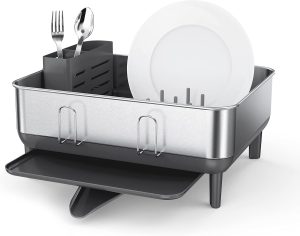
This dish rack is designed to provide organized, elevated drying with consistent airflow, making it a good option for households that regularly dry mixed glassware alongside dishes. Its structured layout keeps items separated, which helps prevent contact-related moisture trapping.
In practice, this type of rack works well for upright drying. Glasses rest securely while water drains away, and the open design allows air to circulate around bowls and rims. That airflow is especially useful when drying thicker glassware or pieces that retain water at the base.
The rack’s stability reduces the need for repositioning during drying, which limits handling and accidental contact with delicate edges. For people who prefer a set drying area rather than flexible mats, this kind of structure encourages consistent habits.
Its limitation is that upright drying leaves more water on rims compared to inverted drying setups. While airflow helps mitigate this, drying may take longer, and occasional repositioning may be needed to ensure complete evaporation. Capacity is also fixed, which can be restrictive for larger loads.
This rack is best for everyday enthusiasts who want an orderly, countertop drying solution that handles a variety of glassware and dishes while maintaining reasonable airflow and separation.
Best Non-Slip, Over-Sink Drying Mat

This silicone drying mat is designed to manage water immediately by allowing it to drain away rather than absorb and hold it. Its primary advantage is moisture control through drainage, especially in over-sink or large-surface setups.
In use, this mat works well for glassware that benefits from immediate water runoff. When placed over a sink or on a sloped surface, water drains away as soon as glasses are set down, reducing the time moisture stays in contact with rims and bases. That can significantly limit mineral spotting and odor formation compared to flat, non-draining surfaces.
The non-slip surface adds stability without gripping glassware too tightly. This helps prevent tipping while avoiding pressure points that could trap moisture or stress thin edges. The mat’s flexibility also makes it useful for larger or irregular drying areas where rigid racks are impractical.
Its limitation is evaporation speed once water has drained. Because silicone does not absorb moisture, drying relies entirely on airflow. In still or humid environments, glasses may need more space or time to fully dry. It also does not separate pieces, so spacing becomes important when drying multiple glasses at once.
This mat is best for everyday enthusiasts who want a versatile, easy-to-clean drying surface, particularly for over-sink setups or larger drying zones where quick drainage is more important than structured separation.
Choosing Drying Solutions That Protect Glassware Over Time
Drying is where many long-term glassware issues quietly begin. When moisture lingers too long or airflow is restricted, problems like haze, mineral film, and odor buildup become more likely, even if cleaning habits are otherwise careful.
The best drying solutions reduce contact, promote even evaporation, and fit naturally into daily routines. Whether that means a dedicated rack, an absorbent mat, or a drainage-based surface depends less on the product itself and more on how consistently it encourages air-drying without excess handling.
No drying method can compensate for overcrowding or rushing the process. Allowing space between glasses and giving water time to evaporate fully does more to protect clarity and rims than any single accessory.
Ultimately, the goal is not faster drying, but cleaner drying. When moisture is managed thoughtfully, glassware stays clearer, smells neutral, and requires fewer corrective interventions over time.