
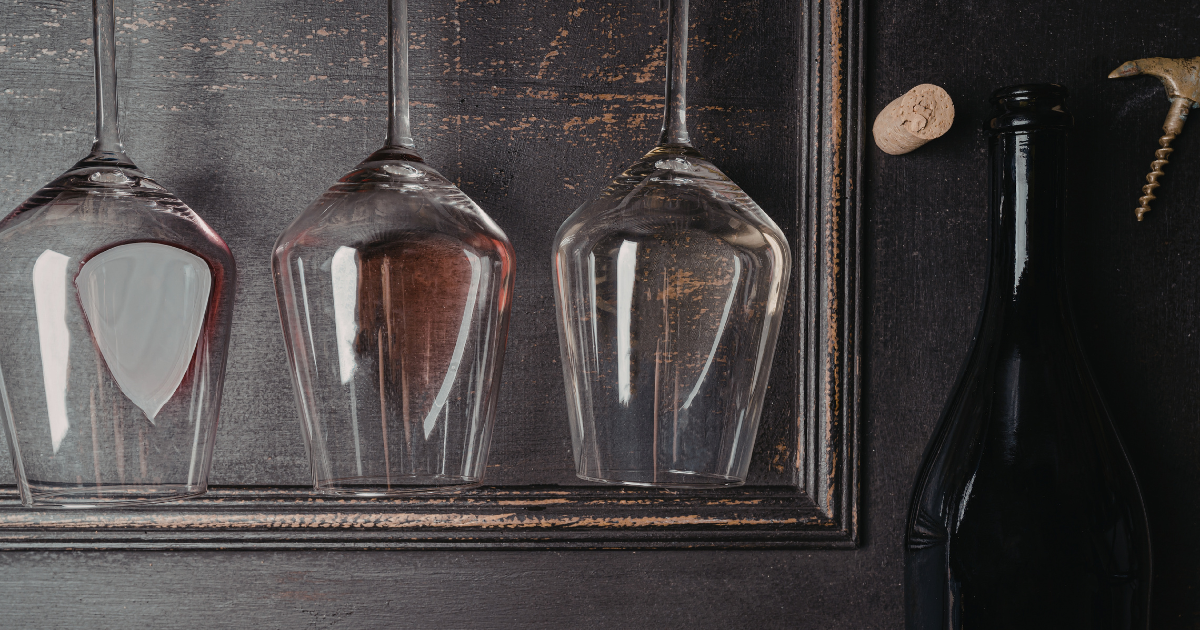
I stored glassware upside down for years without really questioning it. It felt like the careful thing to do. Rims stayed clean, dust stayed out, and everything looked tidy when I opened the cabinet.
At first, there was no reason to think twice. Glasses came out looking fine. Nothing chipped, nothing cracked, and nothing felt obviously wrong. That’s part of why upside-down storage gets treated as a default rather than a choice.
What made me pause wasn’t breakage. It was small changes that were easy to overlook. A faint smell inside a glass that had been sitting for a while. A rim that felt just a little different when drying it. Things that didn’t point to a single cause but showed up slowly over time.
That’s when I started thinking less about whether upside-down storage is “safe” and more about what kind of stress it quietly introduces. Like most storage habits, it solves one problem while creating others. This article looks at those tradeoffs so you can decide when storing glassware upside down makes sense and when it’s worth reconsidering.
What Actually Happens When Glassware Is Stored Upside Down
When a glass is stored upside down, all of its weight is transferred to the rim. That’s true whether the shelf is padded or bare. The glass isn’t heavy, but the load is constant and it sits on the thinnest, most precise part of the piece.
Nothing dramatic happens at first because the pressure is low and evenly distributed. The glass doesn’t deform. The rim doesn’t crack. For a long time, it feels like a non-issue. That’s why upside-down storage gets treated as harmless.
Over time, though, a few subtle things are happening. The rim stays in continuous contact with the shelf surface. If that surface is hard, every small vibration transfers directly into the edge. If it’s soft, the rim can settle slightly into the material, which concentrates pressure rather than eliminating it.
Another factor is repetition. Glasses stored this way tend to sit in the same position for months. That means the same points on the rim carry the same load day after day. If cabinets are opened frequently, that contact isn’t perfectly static. There’s minor shifting, just enough to matter over long stretches.
None of this guarantees damage. Many glasses tolerate upside-down storage without obvious issues. But it explains why any wear that does develop tends to show up quietly and only after a long time, usually at the rim.
Rim Pressure Over Time: The Quiet Tradeoff
The tradeoff with upside-down storage isn’t cleanliness versus care. It’s rim pressure versus convenience.
When a glass sits upright, the base handles the load. When it sits upside down, the rim does. That doesn’t make upside-down storage reckless, but it does shift stress to a part of the glass that isn’t designed to carry weight for long periods.
What makes this tricky is how slow the process is. Rim pressure doesn’t announce itself. There’s no visible sagging or obvious damage. The change, if it comes, shows up as texture rather than breakage. A rim that feels slightly less crisp. An edge that catches a cloth where it didn’t before.
Thin crystal responds to this sooner than thicker glass. Fine rims have less material to distribute pressure, so even low, steady loads matter more over time. Heavier everyday glasses often tolerate upside-down storage much better, especially if they’re rotated regularly.
The key point is duration. A glass left upside down for a week or two is rarely an issue. A glass left that way for months, in the same spot, under the same conditions, is experiencing something different. The stress isn’t higher. It’s just unrelieved.
That’s the quiet tradeoff. Upside-down storage keeps dust out, but it asks the rim to do more work than it was meant to do if the glass sits that way long enough.
Surface Matters More Than People Think
The surface a glass rests on plays a bigger role than most people expect. Upside down or not, the shelf is part of the system.
Hard surfaces like bare wood, glass, or laminate don’t absorb much movement. Any vibration from opening a cabinet or moving nearby dishes transfers straight into the rim. Over time, that repeated micro-movement shows up as wear, even if the glass never shifts visibly.
Soft liners help, but they’re not automatically safer. Thick, compressible liners can let the rim sink slightly, which concentrates pressure along a narrow edge. Textured liners can also trap grit or residue that ends up pressed against the rim for long periods.
The safest surfaces tend to be thin, uniform, and clean. Enough cushioning to reduce vibration, but not so much that the rim settles unevenly. Whatever the surface, cleanliness matters. A single grain of grit trapped between rim and shelf can do more long-term damage than the weight of the glass itself.
This is one reason upside-down storage can feel inconsistent. The glass hasn’t changed, but the shelf conditions have. A different liner, a slightly warped shelf, or a bit of debris is enough to change how stress is applied over time.
Moisture Traps and Airflow Issues
Upside-down storage solves one problem but can quietly introduce another: moisture that has nowhere to go.
Even when glassware looks dry, a small amount of moisture often remains, especially around the bowl and stem. When a glass is stored upright, that moisture has a chance to evaporate. When it’s stored upside down, it can get trapped against the shelf surface.
Over time, that trapped moisture creates a closed microclimate. In kitchens or humid homes, this can lead to stale or musty smells that seem to come from the glass itself. The glass isn’t absorbing odor, but residue and moisture sitting in still air can create it.
This is one reason people are surprised to find a glass smells off even though it was clean when it went into storage. Airflow matters more than cleanliness in these cases. Glass stored upside down in a tightly packed cabinet simply doesn’t get much of it.
Humidity makes this more noticeable. Higher ambient moisture slows evaporation and encourages lingering dampness. For a deeper look at how this plays out over time, see Why Glassware Develops a Musty or Stale Smell and How Humidity Affects Stored Glassware.
None of this means upside-down storage is wrong. It just means moisture needs an exit. Without airflow, even small amounts add up.
Upside Down vs Upright vs Side Storage
Each storage position shifts stress to a different part of the glass. None are perfect. The real question is which tradeoff you’re making and whether it matches how the glass will actually be stored.
Upright storage puts weight on the base, which is where the glass is strongest. It keeps pressure off the rim and allows any lingering moisture to evaporate naturally. This works well when shelves are stable and there’s enough space to prevent glasses from touching.
Upside-down storage keeps dust out and can feel like the careful choice, but it transfers weight to the rim and limits airflow. For short stretches or sturdier glasses, that tradeoff is usually fine. Over longer periods, especially with thin crystal, the rim ends up doing more work than it was designed to do.
Side storage spreads weight across the bowl when done on a padded surface. This avoids rim pressure entirely and can be a good option for long-term storage, particularly during moves or seasonal downtime. The limitation is space and the need to prevent glasses from rolling or knocking together.
Upside-down storage also often gets compared to stacking, even though the stresses are different. One concentrates weight on the rim, the other introduces glass-on-glass contact. If you’re deciding between those two compromises, it helps to understand how they differ over time, which is covered in more detail in Is It Safe to Stack Wine Glasses for Storage?
Thinking about storage this way makes the choice clearer. You’re not looking for a universally “safe” position. You’re deciding which part of the glass you’re asking to carry weight, and for how long.
When Upside-Down Storage Is Usually Fine
There are plenty of situations where storing glassware upside down works just fine and doesn’t need fixing.
Short-term storage is the big one. Glasses that are washed, dried, and put away for a few days or even a couple of weeks rarely experience meaningful stress from being upside down. The rim load is brief, and moisture doesn’t have time to linger.
Thicker, everyday glassware also tolerates this position well. Heavier rims distribute pressure better, and small variations in shelf surface matter less. If these glasses are used and rotated regularly, upside-down storage is usually a non-issue.
Surface choice helps too. A clean, thin liner that reduces vibration without letting the rim sink can make upside-down storage much more forgiving. So can cabinets that aren’t opened constantly throughout the day.
In these cases, upside-down storage is simply practical. It keeps glasses clean, saves space, and doesn’t introduce meaningful long-term risk.
When Upside-Down Storage Starts to Work Against You
Upside-down storage becomes less helpful when time, glass type, and environment line up in the wrong way.
Thin crystal with fine rims is the first category where issues show up. These glasses are designed for lightness and precision, not for carrying steady load at the edge. Months of rim pressure, even at low levels, can slowly change how the rim feels.
Long periods without rotation make this worse. When a glass sits in the same position for months, the same points on the rim carry the same stress and any trapped moisture stays trapped.
Poor airflow adds another layer. Cabinets that are tightly packed or rarely opened don’t give moisture a chance to dissipate. That’s when musty smells and stale air show up, even when the glass itself was clean going in.
Frequent cabinet vibration can also tip the balance. In busy kitchens, small movements repeat constantly. When that motion is transmitted directly into the rim, wear becomes more likely.
None of these factors mean damage is inevitable. They just signal that upside-down storage may no longer be the lowest-stress option for that particular setup.
When Upside-Down Storage Makes Sense (And When It Doesn’t)
Upside-down storage makes sense when it solves a real problem without quietly creating another. Short-term storage, thicker glassware, good airflow, and clean shelf surfaces all push the balance in its favor.
It stops making sense when thin rims carry steady pressure for long periods, moisture has nowhere to go, or cabinet conditions amplify vibration. In those cases, the convenience comes at the cost of slow, cumulative stress.
The useful question isn’t “Is upside-down storage safe?” It’s “What is this glass being asked to tolerate while it sits?” Once you think about it that way, the right choice usually becomes obvious.
Upside-down storage isn’t a mistake. It’s a tradeoff. Like most things with glassware, it works best when it’s used intentionally rather than by default.